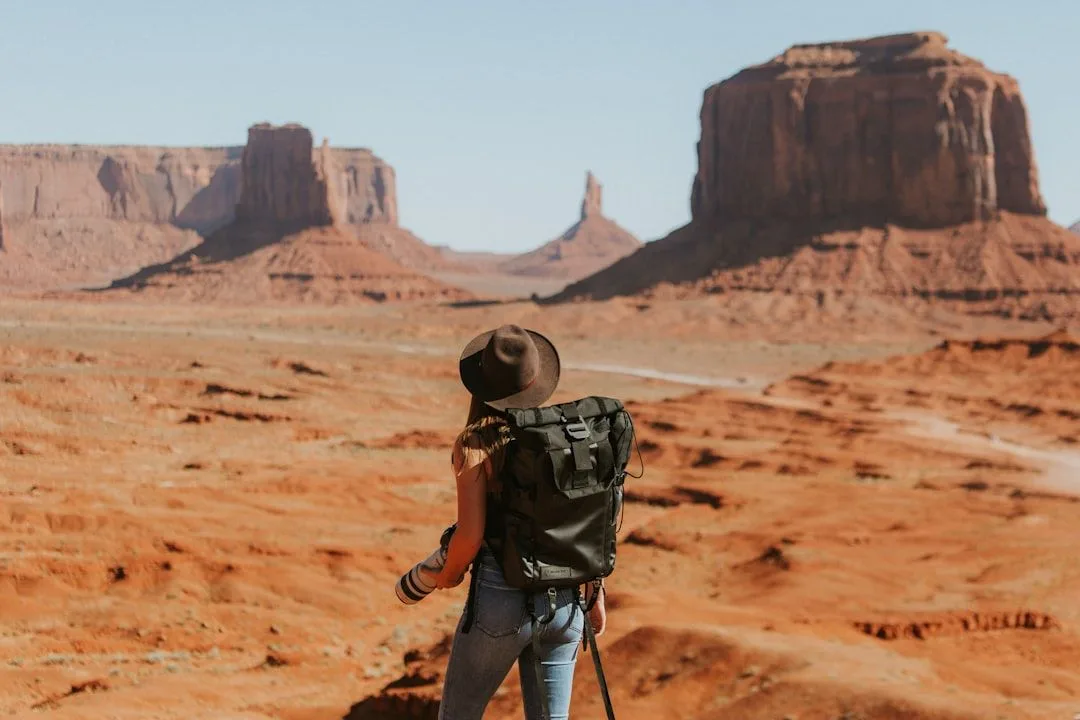
The skills a solo trip requires differ more between regions than between destinations within a region. Knowing what each demands is more useful than a ranking of countries.
Southeast Asia: infrastructure does the work
The densest backpacker network anywhere — hostels, transport, and a route everyone follows.
What it requires: very little. Meeting people happens automatically.
What it costs: $25–40 a day including a private room in most of it.
The specific risk: scooters, and the licence question that determines whether insurance pays.
Thailand, Vietnam, Cambodia, Laos, Indonesia, Malaysia.
Western Europe: logistics are easy, social is not automatic
Reliable transport, short distances, no practical language barrier.
What it requires: deliberate social effort outside the hostel cities, and a budget, since single rooms are scarce and priced for two.
The split: Lisbon, Porto, Kraków, Budapest, Berlin and Prague carry you socially. Rural France, Italy and Ireland do not.
What it costs: €45–140 a day depending sharply on which country.

Latin America: Spanish changes everything
English is less widely spoken outside tourist areas, and Brazil uses Portuguese.
What it requires: some Spanish, which transforms the experience rather than merely helping. Language schools in Guatemala, Colombia and Mexico are cheap and are themselves social, which makes starting a trip with two weeks of study unusually effective.
What it costs: $30–50 a day in most of it.
The specific consideration: safety varies enormously by region rather than by country, and government advisories are frequently issued at state or department level for exactly that reason.
The established routes: Mexico, Guatemala, Colombia, Peru, Bolivia, Argentina, Chile.
East Asia: easy logistics, deliberate socialising
Japan, South Korea and Taiwan — safe, excellent transport, and accommodation and eating formats built for single people.
What it requires: making the social side happen. There is no backpacker corridor, so hostels with common areas, food tours and organised activities are the mechanism.
What it costs: $50–90 a day, less than reputation suggests once you use business hotels and local eating.
Africa: it depends entirely on how
Varies more than any other region.
Established independent routes — Morocco, Namibia, Rwanda, parts of East and Southern Africa — with hostels and transport.
Safari travel carries the steepest single supplements in travel, and joining a group tour is usually the only sensible route for one person.
What it requires: more planning, more budget, and country-by-country research rather than regional generalisation.
The comparison
| Region | Social ease | Logistics | Daily cost |
|---|---|---|---|
| Southeast Asia | Automatic | Easy | $25–40 |
| Western Europe | City-dependent | Very easy | €45–140 |
| Latin America | Good with Spanish | Moderate | $30–50 |
| East Asia | Needs effort | Very easy | $50–90 |
| Africa | Varies | Harder | Varies widely |
The advice that applies everywhere
Stay longer in fewer places. Three or four nights, not two.
Book one group activity early in each place.
Choose accommodation with common areas, whatever the room type.